A resource for students and practitioners spanning dietary therapy, acupuncture, herbal medicines, current issues, and Taoist and Buddhist philosophies.
Monday, December 26, 2011
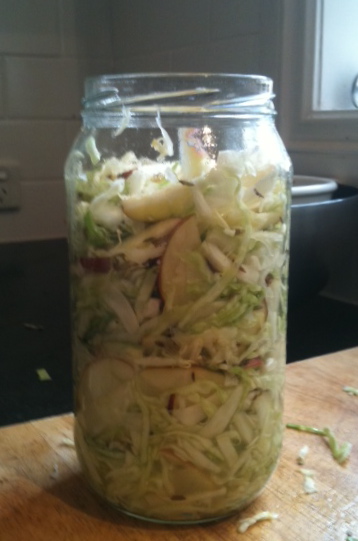
Apple Caraway Sauerkraut
Traditional sauerkraut is pickled by a process called lacto-fermentation. Almost any sauerkraut you buy these days will be either faux pickled (using vinegar) or heat treated to extend shelf life, killing the healthy bacteria which gives Sauerkraut its distinct properties. The fermentation process not only lends a sour, tangy flavour, it also gives sauerkraut remarkable nutritional properties, improving digestion, encouraging the growth of healthy bowel flora, as well as offering a powerhouse of vitamin C and enzymes.
For those familiar with Chinese Medicine -
From a Traditional Chinese Medicine perspective, the sour nature of fermentation lends an astringent property that helps to conserve fluids. Conditions such as diarrhoea, excessive sweating and haemorrhage (or Yin, Jing Ye or Blood deficiency in TCM) will all benefit from its sour, astringent nature. As salt is the flavour that governs the Kidneys, a healthy amount will support nourishment of the Kidney and water element. Sauerkraut also supports strong digestive function, helping the Spleen with the essential process of transformation and transportation.
Ingredients
1 green cabbage
2 granny smith apples
1 teaspoon caraway seeds
Celtic, macrobiotic or himalayan sea salt (about 1/2 to 1 tbs)
Method
Firstly find a nice big glass jar. My sauerkraut jar is a recycled 1kg honey jar, and I find it fits approximately one small cabbage once packed. Sterilise your jar following instructions I have in my previous post on pickled ginger here.
Choose a lovely fresh organic green cabbage. The fresher the better, as a cabbage with a high water content is essential for making a good brine for the fermentation process.
Chop your cabbage finely or coarsely, and place into a large bowl as you chop. Sprinkle the cabbage with salt as you go. I usually chop a layer of cabbage, a layer of sliced apple and then sprinkle with approx two big pinches of salt. Repeat until you have used the whole cabbage. Sprinkle the caraway seeds into the bowl and mix them through evenly.
The salt will pull the water out of the cabbage through osmosis, allowing it to ferment. It will also keep the cabbage nice and crunchy.
Now pack the cabbage and apple into your sterilised glass jar. Get in as much as you can with a spoon, then use a smaller glass jar that fits into the mouth of the larger one to pack it in. The packing helps to bring more water out of the cabbage; the aim is to have enough brine to cover the cabbage in order to keep it from being exposed to the air and becoming mouldy.
Once you have packed in as much as you can fit, fill your smaller packing jar with water and leave inside the mouth. Then place a heavier weight on top of the smaller jar, such as a can. Continue to press down on the weight periodically to bring more water out of the cabbage and to ensure that your cabbage is always covered in the brine. If the brine evaporates and the cabbage isn't covered dissolve about a teaspoon of salt to a cup of water and pour this into the jar.
Now leave it to ferment, checking it every couple of days, rinsing the smaller jar to keep it clean. I find green cabbage ferments quite quickly, even in cooler weather, it usually takes about a week. Taste it every couple of days until you get the taste you desire. You can leave it for longer if you want a more sour taste.
Once fermented keep sealed in the fridge. Eat on its own, with avocado on toast, as a side with your meals...the possibilities are endless! A little after a heavy meal will also aid digestion, the sour nature cleansing the palate and the pungency moving food stagnation.
Saturday, December 24, 2011
Nature meditation
Wilson's Creek, Mullumbimby
I've been lucky enough to be able to spend Christmas break house-sitting in the hinterland hills of Mullumbimby in Northern New South Wales. We've had the luxury of a big deck, hammock, vege garden and a massive sun room for yoga and meditation. Observing nature is always something that has fascinated and excited me, a practice that is extremely rejuvenating; putting the heart and mind at ease.
Salad from the garden
It's times like these that make me realise how much of a year of being busy in the city takes its toll on the body. We've found ourselves reading and napping the day away. How precious it is to allow ourselves to truly rest the mind and body.
Can't be a holiday without vegan green tea pies!
*Thanks to our new friends who so graciously let us look after their home
Wednesday, September 21, 2011
Po - The Corporeal Soul
Chinese character for 'metal'
The Po is the spirit of the metal element – most often referred to as the Corporeal Soul – representing our primal urges or animal instinct. The function of the Po is to receive what is of essential worth, and to let go of ideals and experiences that no longer serve us.
Metal imparts minerals to the earth, plants, and all beings. It is strong yet malleable; capable of being remoulded. If it is too rigid, however, it can be shattered. This imagery of metal can be applied to the individual – is their perception of reality fixed and unchanging? Are they open to new experiences, able to let go of the past and move forward according to their life experiences?
The organs of the metal element – the lungs and large intestine – form a connection between the internal and external world. With the lungs we breathe in life's experiences, retaining what nourishes us, and with the large intestine we understand the letting go, discharging what no longer serves us, letting go of past experiences and ideals that are no longer of use to us on our journey. The Po is the spirit in Taoist philosophy that upon death leaves the body and returns to the earth, becoming the fertiliser that encourages new growth.
Greif is the emotion associated with the metal element, the Po and the lungs. Those with a metal constitution which is out of balance may have an inability to let go of what is no longer of value, or may be unable to hold onto what is valuable. This imbalance may manifest itself as a strong presence of grief, or a sense of longing (understood as a grief focused towards the future) leading the individual to continually react inappropriately to loss or gain in their life.
This continual reaction to grief may see the individual become obsessed with a chosen path to the point where discipline, rigidity and emotional coldness towards others are seen as necessary to help them achieve. They may also be susceptible to isolation, a lack of self-worth and loneliness – leading them to seek to fill this void with material possessions or external successes, and not recognising the short-lived nature of such pursuits. Those with a propensity to this imbalance must learn to form a spiritual connection with themselves, and accept that the value placed on the material will inevitably fade and reliance upon these external experiences (whether this be possessions, careers, relationships) as the only source of happiness will only ever be transitory; learning that true contentment will come from within, and not from attachment to the material world.
When in balance the individual will have a healthy sense of self-worth and possess the ability to appreciate what is of value in their life. They are open to change and have an inner sense of knowing of when to let go of ideals that no longer serve them.
The symbol of the flower, often used in Buddhism to represent the transitory nature of all things, is helpful to contemplate when trying to understand the metal element. Representing a need to find balance between appreciating the inherent beauty in all things, yet understanding that this beauty will fade, the flower embodies mourning and letting go when necessary.
Japanese wild flower in Kamikochi, courtesy of my mum
References
* Jarrett, L, 2009, Nourishing Destiny
* Rossi, E, 2007, Shen: Psychoemotional aspects of Chinese Medicine
Monday, September 19, 2011
Yi - The Earth Spirit
Chinese character for 'earth'
Yi is the spirit of the earth element. The earth provides the centre around which the transformations of the other four elements take place. The earth element allows us to establish boundaries in regards to nourishing ourselves and nourishing others. When in balance it allows us to react with a balanced response to feelings of need. Earth constitutional types are prone to living life in terms of the continual fulfilment of needs, and may suffer from either a lack of centeredness (feeling lost, confused) or an excessive centeredness (selfishness). This may manifest as excessive thought, pensiveness and worry on an emotional level. This excessive worry can lead to people caring obsessively for themselves, or so much to the needs of others that their own resources are exhausted. With excessive worry the Yi is weakened, and we have less capacity to move forward and manifest our true path in life.
The Yi is responsible for the emotional digestion of thought, allowing us to process and transform our life experiences in a balanced way. When the earth element is unbalanced, obsessive thought patterns may result and the individual is unable to manifest productive action in their lives, unable to digest and be nourished by their life experiences.
Those with a balanced earth element and Yi are able to meet the needs of themselves and others in a balanced way, resulting in altruistic behaviour. The Confucian ideal of true altruism aligns itself with Buddhism where, expecting nothing in return, the individual is able to care for self and others without attachment to a result. To bring the earth element back into balance, self reflection and meditation to centre the individual brings about the most profound change. For those with an excessive centeredness, meditation that cultivates altruism, such as 'metta' or loving-kindess* will allow the individual a way to take focus off themselves and turn it outwards to others. For those who are exhausting their reserves by obsessively trying to meet the needs of others, guided breathing meditation techniques will help to calm the mind and excessive worry, and teach the individual to reflect upon their life experiences, digesting them in a balanced way that nourishes the self.
References
* Jarrett, L, 2009, Nourishing Destiny
* Rossi, E, 2007, Shen: Psychoemotional aspects of Chinese Medicine
* See Sharon Salzberg's website here
Yi is the spirit of the earth element. The earth provides the centre around which the transformations of the other four elements take place. The earth element allows us to establish boundaries in regards to nourishing ourselves and nourishing others. When in balance it allows us to react with a balanced response to feelings of need. Earth constitutional types are prone to living life in terms of the continual fulfilment of needs, and may suffer from either a lack of centeredness (feeling lost, confused) or an excessive centeredness (selfishness). This may manifest as excessive thought, pensiveness and worry on an emotional level. This excessive worry can lead to people caring obsessively for themselves, or so much to the needs of others that their own resources are exhausted. With excessive worry the Yi is weakened, and we have less capacity to move forward and manifest our true path in life.
The Yi is responsible for the emotional digestion of thought, allowing us to process and transform our life experiences in a balanced way. When the earth element is unbalanced, obsessive thought patterns may result and the individual is unable to manifest productive action in their lives, unable to digest and be nourished by their life experiences.
Those with a balanced earth element and Yi are able to meet the needs of themselves and others in a balanced way, resulting in altruistic behaviour. The Confucian ideal of true altruism aligns itself with Buddhism where, expecting nothing in return, the individual is able to care for self and others without attachment to a result. To bring the earth element back into balance, self reflection and meditation to centre the individual brings about the most profound change. For those with an excessive centeredness, meditation that cultivates altruism, such as 'metta' or loving-kindess* will allow the individual a way to take focus off themselves and turn it outwards to others. For those who are exhausting their reserves by obsessively trying to meet the needs of others, guided breathing meditation techniques will help to calm the mind and excessive worry, and teach the individual to reflect upon their life experiences, digesting them in a balanced way that nourishes the self.
References
* Jarrett, L, 2009, Nourishing Destiny
* Rossi, E, 2007, Shen: Psychoemotional aspects of Chinese Medicine
* See Sharon Salzberg's website here
Monday, September 12, 2011
Amazake - Sweet Japanese Pudding
Koji Spores
Amazake is a sweet fermented rice pudding made by converting the carbohydrates in rice to simple sugars. The process is carried out by a mold called Aspergillus orysae, bought in the form of koji (rice inoculated with Aspergillus spores), the same culture used to make miso. Amazake literally translates as ‘sweet sake’, although it contains no alcohol, if left to ferment it becomes alcoholic and the first step in the process of making Sake.
Traditionally Amazake was made into a warming tonic by heating amazake with water, and topping with grated ginger. It is still served today in Japan during Shinto festivals and in the new year. It can also be used as a sweetener for baking. Because of the fermentation process, amazake is literally pre-digested, making it an easily assimilated source of nourishment for the earth element.
How to make
Ingredients
2 cups rice or any other grain (traditionally sweet white rice is used but I use brown)
200 grams Koji
Water
Method
1. Cook 2 cups of rice (or other grain) in 6 cups of water. Using more water lends to a softer grain.
2. While cooking your rice prepare an area you can keep at a warm temperature for when you are fermenting your amazake. I'm lucky enough to have a dehydrator that I can keep at a constant temperature of 60 degrees C. Don't worry if you don't have this luxury however, you can fill a small insulated esky with boiling hot water and add other jars of hot water to maintain the heat. Put on the lid and keep in a warm place.
3. When the grain is cooked and all the water absorbed, uncover and allow to cool until you can hold your finger in the rice but it is still hot. If you let it get too cool the koji will not ferment effectively.
4. Now add the Koji into the cooked rice and stir well. The koji I have found is bought pressed into a cake-like shape, but crumbles easily between your fingers. I bought mine in Melbourne from 'Fuji Mart' at the Prahan markets, which is an incredibly exciting and nostalgic place if you've ever been to Japan. Otherwise try to order some online.
5. Pack the koji into sterilised pre-heated glass jars. I find this recipe fits into one 4 litre jar. Screw on the lid and place in either your pre-prepared warm esky or dehydrator. If using a dehydrator place a bowl of water in the bottom to keep some moisture circulating. Set to 60 degrees Celsius.
6. Check on your amazake after 8-12 hours. Taste to check for sweetness. If it tastes very sweet, then it is ready. If is isn't very sweet you may need to leave it for up to 24 hours. If you are using an esky replace the hot water and leave to ferment for longer until very sweet. If you leave it for too long however it will become alcoholic (the first stage of making sake)
7. Bring 2 cups of water to the boil and slowly add the amazake, stirring frequently. The boiling process stops the sugars fermenting into alcohol. Bring the amazake to a gentle boil and turn off the heat.
8. You can now serve the amazake like this as a pudding, or blend it with extra water (or almond or soy milk) into a liquid consistency and serve warm or cold as a drink. Season with whatever you please - Grated ginger, cinnamon, nutmeg, vanilla, black sesame, green tea... I will be posting some more recipes for amazake soon!
Amazake made from black glutinous rice with Adzuki bean paste
*Adapted from Wild Fermantation, Sandor Ellix Katz, 2003 (see resources)
Sunday, June 12, 2011
Black Sesame and Lily Bulb congee

I came across this nourishing combination at the end of the semester as my yin reserves were depleting..
Bai He (dried white lily bulb), is sweet and slightly cold in nature. It moistens the Lung and clears heat from the heart. It can be used to treat chronic cough due to Lung Yin deficiency, chronic low grade fever, insomnia with abundance of dreams, irritability and restlessness. Black sesame strengthens the liver and kidney systems, as well as moistens the intestines to relieve constipation.
This congee is good for those with a dry cough, insomnia, irritability, menopause with hot flushes, eyesight problems or constipation. For those familiar with Chinese Medicine principles this dish is good for nourishing yin and blood, tonifying qi and calming the spirit. It clears lung and heart heat, nourishes liver, kidney and stomach yin.
Ingredients
1/2 cup short grain brown rice
1/4 cup black sesame seeds
10g of Bai He (dried white lily bulb) (soaked overnight)
10g Chinese Wolfberries
honey to taste (optional)
Method
Grind the uncooked rice and black sesame together in a food processor into a fine powder. Soak overnight if you can, as this will make it more digestible and give you a shorter cooking time in the morning. Place the ground brown rice and black sesame into a pot with the dried lily bulb and wolfberries, adding enough water just to cover. Bring to the boil, then reduce the heat to a simmer. Continue adding water (about 1/4 cup at a time) as the rice absorbs. Cooking time all up should take about 1/2 an hour to 40 mins, until the rice becomes a tender, porridge-like consistency. Top with honey for a little sweetness if desired!
Tuesday, April 12, 2011
The controversy of the soy based meal..

There is increasing concern that soy products may not be the super food that they were once heralded for, with high consumption being linked to thyroid dysfunction due the high presence of phytoestrogens (the same phytoestrogens are said to reduce the risk of heart disease and certain cancers), and now even Alzheimer's is being tentatively linked to this little green bean. Not to mention its status as the king of GM crops, the patented GM RoundupReady Soy (courtesy of Monsanto) is responsible for increasing deforestation in the amazon, with environmental and health impacts that are far from responsible or sustainable.
So.. To eat or not to eat?
In regards to the health concerns of consuming soy I stick to a whole foods approach. Follow the mantra of everything in moderation, using the highest quality ingredients from environmental sustainable sources. Don't buy soy unless it is certified organic or biodynamic. You can almost guarantee it will be genetically modified if you haven't got the stamp of approval from a reputable body. GM foods do not have to be labeled in Australia yet, and buying organic is the only guaranteed way to avoid these unsustainable practices. Visit Gene Ethics - www.geneethics.org/campaigns - to learn more..
Choose fermented whole-food soy products over isolated soy, powders or cheaper soy products. Mass produced soy sauce for example is often made using a chemical hydrolisation process and is very different to Tamari, a product which is aged and fermented. Other fermented soy products include tempeh, miso, natto, tamari and shoyu. Asian cultures have been consuming small amounts soy for centuries, with the majority being from fermented forms and some tofu. We tend to move towards extremes in our culture, consuming larger portions of isolated soy products, and consequently end up with health problems as a result.
Subscribe to:
Posts (Atom)


